
Australian Aboriginal Funeral Traditions
"Does debt disappear when you pass away? Learn how a deceased person's debts are handled, who is responsible, and how to protect your family."
Australia’s First Nations cultures are the oldest continuous cultures in the world. With that depth comes a wide diversity of spiritual beliefs, customs, and mourning practices. When people search for information about an australian aboriginal funeral, it’s important to understand there is no single tradition that applies to all Aboriginal communities.
Practices vary greatly depending on language group, region, and cultural law. What remains consistent is the deep respect for the deceased, the land, and the ongoing spiritual connection between the living and those who have passed.
The spiritual understanding of death
In many Aboriginal cultures, death is not seen as an end, but as a transition. The spirit returns to Country—the land it belongs to—or to the Dreaming. Maintaining harmony between the physical and spiritual worlds is central to funeral practices.
An australian aboriginal funeral is not only about farewelling the person, but also about ensuring the spirit’s safe passage and protecting the community.
“Sorry Business”
One of the most widely recognised aspects of Aboriginal mourning is “Sorry Business.” This refers to the period of mourning that follows a death. It may involve gatherings, ceremonies, storytelling, song, dance, and extended time away from work or school.
Sorry Business can last days, weeks, or longer, depending on cultural obligations. During this time, families and communities come together to grieve collectively.
Ceremonies and practices
Ceremonies within an australian aboriginal funeral may include:
smoking ceremonies to cleanse and protect
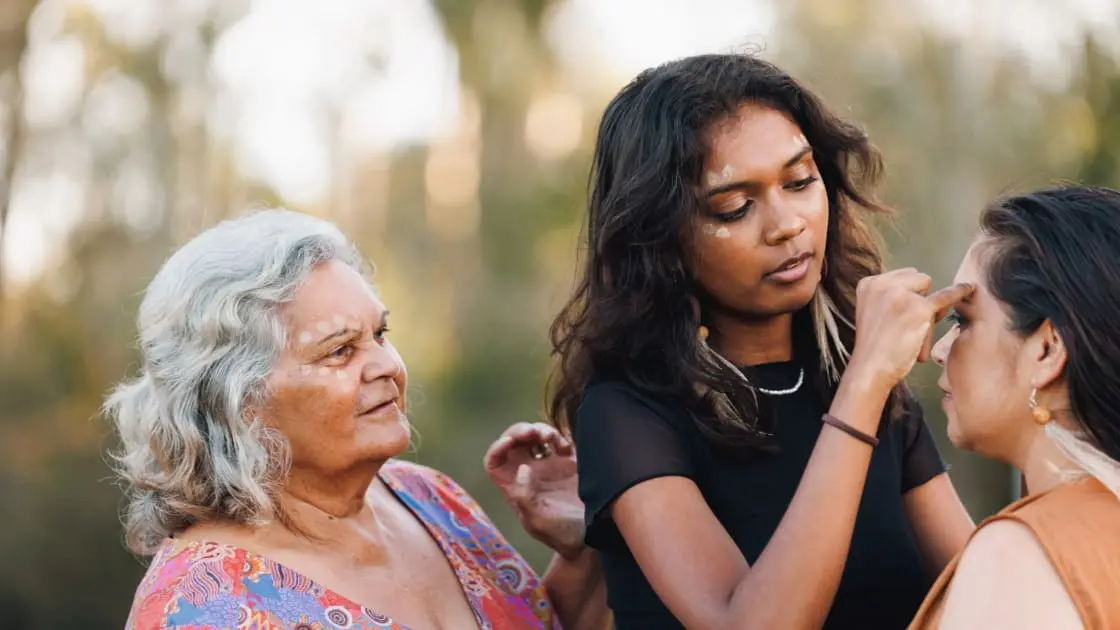
body painting or symbolic markings
traditional songs and dances
burial on ancestral land where possible
In some communities, names or images of the deceased are avoided for a period after death as a sign of respect. This is why you may see warnings before Aboriginal media content noting that images or voices of deceased persons may appear.
Burial and cremation
Traditionally, burial on Country was common, often with rituals tied to specific locations. Today, practices may include burial, cremation, or a combination of both, influenced by location, access, and personal or family preference.
Some families may hold multiple ceremonies—one immediately after death and another later when remains are returned to Country.
Community and kinship
An australian aboriginal funeral is rarely a private event. Extended kinship networks play a central role, and large numbers of people may attend, sometimes travelling long distances.
This communal approach reflects the interconnected nature of Aboriginal society, where loss is shared across family lines and responsibilities are collective.
Etiquette for non-Aboriginal people
If you are invited to attend or observe an Aboriginal funeral or Sorry Business:
follow the guidance of the family or Elders
dress modestly and respectfully
avoid taking photos unless explicitly permitted
respect requests regarding silence, participation, or absence
If you’re unsure, ask respectfully or observe quietly.
Why understanding matters
Learning about australian aboriginal funeral traditions is not about curiosity—it’s about respect. Recognising cultural differences helps avoid unintentional harm and supports reconciliation through understanding.
A respectful conclusion
Aboriginal funeral practices reflect profound spiritual connection, cultural continuity, and collective care. There is no “one way” to mourn—but there is always a way to show respect.
At Black Tulip Funerals, we acknowledge the importance of culturally appropriate care and recognise the need for sensitivity, listening, and humility when supporting Aboriginal and Torres Strait Islander families.